
Overview
Bachelor of Commerce (B.Com) is a 3-year undergraduate degree program that provides a solid foundation in commerce, finance, accounting, and business management. It is one of the most sought-after courses for students aiming for a career in business, finance, banking, or accounting.
The B.Com curriculum includes subjects such as Financial Accounting, Business Law, Economics, Taxation, Auditing, and Cost Accounting. It helps students develop analytical, managerial, and communication skills required in the corporate world.
B.Com graduates are in high demand across sectors like banking, insurance, accounting firms, corporate finance, and government services. The degree also opens doors to higher education in MBA, CA, CS, CFA, M.Com, and other professional courses.
Modern B.Com programs integrate case studies, internships, industry projects, and the latest software tools in finance and accounting to provide practical exposure and industry readiness.
Whether you're aiming for a corporate role, a government job, or your own startup, B.Com offers a versatile platform to build a rewarding career in commerce and business.
Key Highlights
- Duration: 3 years (6 semesters)
- Eligibility: 10+2 (any stream, preferably with Commerce or Mathematics)
- Average Fees: ₹15,000 – ₹1,50,000 per year
- Job Prospects: Accountant, Financial Analyst, Tax Consultant, Auditor, Banking Officer
- Higher Studies: MBA, M.Com, CA, CS, CMA
- Global Recognition: Accepted for PG programs abroad in Finance, Management & Accounting
- Specializations: Finance, Accounting, Taxation, Banking, Economics
Courses & Specializations
B.Com offers diverse specializations to cater to the evolving needs of the business and finance sectors. Students can focus on areas like accounting, finance, taxation, and emerging fields such as fintech and business analytics.
The B.Com curriculum is designed to balance theoretical knowledge with practical application through internships, case studies, software training (like Tally, SAP), and industry projects to make graduates workplace-ready.
Core Specializations
- B.Com in Accounting
- B.Com in Finance
- B.Com in Banking
- B.Com in Taxation
- B.Com in Economics
- B.Com in Auditing
Professional Tracks
- B.Com in Company Secretaryship
- B.Com in Cost and Management Accounting
- B.Com in Financial Markets
- B.Com in Corporate Law
- B.Com in Capital Markets
- B.Com in Actuarial Science
Business & Management
- B.Com in Business Administration
- B.Com in E-Commerce
- B.Com in International Business
- B.Com in Supply Chain Management
- B.Com in Entrepreneurship
Technology & Analytics
- B.Com in Business Analytics
- B.Com in Financial Technology (FinTech)
- B.Com in Data Analytics
- B.Com in Digital Marketing
- B.Com in Management Information Systems
Emerging Specializations
To stay ahead in the competitive market, many colleges now offer new-age B.Com specializations blending finance, technology, and global business trends:
💳 FinTech & Blockchain
Explore digital banking, cryptocurrency, smart contracts, and financial innovation in the modern economy.
📈 Data-Driven Finance
Focuses on financial analytics, investment modeling, and data interpretation using tools like Excel, Power BI, and R.
🌍 International Business
Prepares students for global trade, export-import policies, and multinational finance operations.
📊 ESG & Sustainable Finance
Learn principles of environmental, social, and governance investing aligned with responsible finance practices.
Subjects & Curriculum
The B.Com curriculum is crafted to build a strong foundation in commerce, finance, accounting, and business administration. It blends theoretical concepts with practical application through case studies, industry exposure, and software training.
Spanning six semesters, the program covers core subjects, electives, soft skills, and project work. It prepares students for careers in finance, banking, management, and entrepreneurship.
Year 1 (Semesters 1-2)
Commerce & Accounting Fundamentals
- Financial Accounting
- Business Economics
- Business Organisation & Management
- Business Mathematics / Statistics
- English / Communication Skills
- Environmental Studies / Indian Economy
- Computer Applications in Business
Year 2 (Semesters 3-4)
Core Commerce & Finance Subjects
- Corporate Accounting
- Cost Accounting
- Business Law
- Income Tax Law & Practice
- Principles of Marketing
- Banking & Insurance
- E-Commerce / Digital Marketing
Year 3 (Semesters 5-6)
Specializations & Industry Readiness
- Financial Management / Auditing
- Indirect Taxes (GST)
- Business Research Methods
- Investment Analysis / International Business
- Entrepreneurship Development
- Project Work / Internship
- Aptitude & Career Preparation
Assessment Methods
B.Com programs evaluate students using diverse academic and skill-based methods to ensure overall development:
Term Exams (50%)
Theory exams testing concepts in commerce, accounting, and law
Assignments & Case Studies (20%)
Business scenarios, financial problem-solving, and written submissions
Presentations & Viva (15%)
Communication and critical thinking through topic-based presentations
Project/Internship (15%)
Real-world exposure through final year projects or industry internships
Career Opportunities
B.Com graduates enjoy a broad range of career opportunities in the fields of finance, accounting, banking, taxation, business analytics, and management. The degree equips students with practical knowledge and analytical skills that are highly valued across industries.
With strong foundations in commerce, economics, and business law, B.Com graduates are well-prepared for entry-level roles and long-term career advancement in both the public and private sectors.
Many graduates also opt for higher studies such as M.Com, MBA, CA, CS, CFA, or competitive exams like UPSC and banking exams.
Finance & Accounting
- Accountant – ₹3–6 LPA (CA firms, corporates)
- Auditor – ₹4–8 LPA (Consulting firms, banks)
- Tax Consultant – ₹3–7 LPA (Tax firms, self-practice)
- Finance Executive – ₹4–9 LPA (MNCs, startups)
Banking & Insurance
- Bank PO/Clerk – ₹4–7 LPA (Public & private banks)
- Insurance Advisor – ₹3–6 LPA (LIC, private insurers)
- Credit Analyst – ₹5–10 LPA (NBFCs, banks)
- Loan Officer – ₹3–6 LPA (Banking sector)
Corporate & Consulting Roles
- Business Analyst – ₹4–9 LPA (Consulting firms, corporates)
- Management Trainee – ₹5–10 LPA (MNCs, FMCG)
- HR/Operations Executive – ₹3–6 LPA (Startups, SMEs)
- Marketing Associate – ₹3–7 LPA (Sales, branding roles)
Professional Certifications
- Chartered Accountant (CA) – ₹7–20 LPA
- Company Secretary (CS) – ₹6–15 LPA
- CFA/CPA/ACCA – ₹8–25 LPA (Global roles)
Government & Public Sector
- UPSC/SSC/State PSC – ₹6–12 LPA (Civil services, audits)
- IBPS/Banking Exams – ₹5–10 LPA (PSU Banks, RBI)
- Indian Railways/Defence Accounts – ₹5–8 LPA
Entrepreneurship & Freelancing
- Business Consultant – ₹5–12 LPA (Startups, SMEs)
- Freelance Tax Advisor – ₹3–10 LPA+ (Independent clients)
- E-commerce Seller – Variable (Online retail business)
Admission Process
The admission process for B.Com programs differs based on the institution and course type (General or Honors). Most colleges offer admission through merit-based selection, while some conduct entrance exams or interviews for honors and specialized courses.
Admissions typically begin in April or May, with the academic session starting from July to September. Candidates should closely monitor application timelines of their preferred universities and colleges.
Eligibility Criteria
Candidates must meet the following criteria to apply:
- Educational Qualification: 10+2 or equivalent from a recognized board
- Stream: Commerce preferred; Science/Arts students also eligible
- Minimum Marks: 45%–50% aggregate (varies by college)
- English/Mathematics: Required for some B.Com (Hons) programs
- Age Limit: Generally 17–25 years (may vary by institution)
Types of Admission
Merit-Based Admission
Based on Class 12 marks; DU, BHU, Mumbai University, etc., follow this model.
Entrance-Based Admission
CUET, NMIMS NPAT, and certain private universities conduct entrance exams for B.Com (Hons).
Direct Admission
Offered by many private universities under general or management quota.
Application Process
Follow these steps:
- Choose Colleges: Shortlist based on course, location, reputation
- Apply Online: Fill out application forms on university websites
- Upload Documents: Submit academic and identity proof digitally
- Entrance Exam: (If applicable) Appear and check results
- Merit List/Counseling: Wait for merit list or attend counseling
- Seat Allotment: Accept offer and proceed to payment
- Document Verification: Submit originals for physical verification
- Fee Payment: Pay tuition fees to confirm your seat
Required Documents
- 10th & 12th Mark Sheets
- Transfer & Character Certificate
- Passport-size Photographs
- Aadhar Card or Govt-issued ID
- Category Certificate (if applicable)
- Domicile/Income Certificate (if applicable)
- CUET/Other Entrance Scorecard (if applicable)
Important Dates & Timeline
April - May
Application forms open across universities
May - June
Entrance exams (CUET, NPAT, etc.), merit list announcements
June - July
Counseling sessions, seat allotments, and document submission
July - September
Session commencement and orientation programs
Fee Structure
The fee structure for B.Com programs depends on the type of institution (government, private, or deemed), the specialization (General or Honors), and the location. B.Com is generally considered an affordable course compared to many other professional degrees.
In addition to tuition fees, students should consider expenses such as accommodation, study materials, and personal needs. Scholarships, fee waivers, and education loans are available for deserving candidates.
| College Type | Average Annual Fees | Total Course Fee | Additional Costs |
|---|---|---|---|
| Government Colleges | ₹5,000 - ₹30,000 | ₹15,000 - ₹90,000 | ₹10,000 - ₹30,000 |
| Private Colleges | ₹20,000 - ₹1,00,000 | ₹60,000 - ₹3,00,000 | ₹30,000 - ₹70,000 |
| Deemed Universities | ₹50,000 - ₹1,50,000 | ₹1,50,000 - ₹4,50,000 | ₹50,000 - ₹1,00,000 |
| International Universities | ₹4,00,000 - ₹10,00,000 | ₹12,00,000 - ₹30,00,000 | ₹2,00,000 - ₹5,00,000 |
Detailed Cost Breakdown
Academic Expenses
- Tuition Fees: ₹5,000 - ₹1,50,000 per year
- Library & Resource Access: ₹1,000 - ₹5,000 per year
- Exam & Registration Fees: ₹2,000 - ₹8,000 per year
- Books & Study Material: ₹4,000 - ₹10,000 per year
Living Expenses
- Hostel/PG: ₹25,000 - ₹1,00,000 per year
- Food & Mess: ₹20,000 - ₹50,000 per year
- Personal Expenses: ₹10,000 - ₹30,000 per year
Financial Aid Options
- Merit Scholarships: Up to 100% tuition waiver
- Government Schemes: Up to ₹50,000 per year
- Private Scholarships: Based on performance and income
- Education Loans: ₹50,000 – ₹7,00,000 from banks/NBFCs
Miscellaneous Costs
- Online Courses: ₹1,000 - ₹7,000 per year
- Certifications (e.g. Tally, Excel): ₹2,000 - ₹10,000
- Field Visits/Workshops: ₹2,000 - ₹6,000
- Student Activities: ₹1,000 - ₹5,000 per year
Note: Fee figures are indicative and may vary based on institution type, location, specialization (General or Honors), and optional activities. Always check the official fee structure from the college/university website.
Course Comparison
Choosing the right undergraduate course is vital for your academic and career success. Here's how B.Com compares with other popular programs in terms of focus, career paths, and future study options.
| Course | Duration | Focus Area | Career Scope | Average Salary | Higher Studies |
|---|---|---|---|---|---|
| B.Com | 3 years | Accounting, Finance, Taxation | Banking, Audit, Finance, Govt. Jobs | ₹2–8 LPA | M.Com, MBA, CA, CS, CMA |
| B.Com (Hons) | 3 years | Advanced Commerce, Finance, Economics | Investment Banking, Research, CA Firms | ₹3–10 LPA | M.Com, MBA, CFA, CA |
| BBA | 3 years | Business Management & Strategy | Marketing, HR, Consulting | ₹3–10 LPA | MBA, PGDM |
| BA (Economics) | 3 years | Micro & Macro Economics | Economic Research, Govt. Exams | ₹3–12 LPA | MA Eco, MBA, IES, UPSC |
| BCA | 3 years | Computer Applications | Software, Web Development, IT Support | ₹3–15 LPA | MCA, MBA |
| B.Sc (Statistics) | 3 years | Mathematics & Data Analytics | Actuarial Science, Data Analytics | ₹4–12 LPA | M.Sc Stats, MBA, Data Science |
Course Analysis
B.Com vs B.Com (Hons)
Choose B.Com: If you want a general commerce degree with flexibility and balanced coursework.
Choose B.Com (Hons): If you aim for a specialized career in finance, economics, or CA.
B.Com vs BBA
Choose B.Com: If you're interested in accounting, taxation, and corporate laws.
Choose BBA: If you want to pursue business management and leadership roles.
B.Com vs BA (Economics)
Choose B.Com: For careers in accounting, auditing, and financial analysis.
Choose BA Eco: If you want to explore economic theories, research, or IES/UPSC.
B.Com vs BCA
Choose B.Com: If you want to build a foundation in finance, taxation, or pursue CA/CS.
Choose BCA: If your interest lies in technology, programming, or software careers.
Popular Colleges
India is home to numerous prestigious institutions offering B.Com programs. These colleges are known for academic excellence, experienced faculty, robust commerce curricula, and strong placement support across finance, accounting, and business sectors.
Shri Ram College of Commerce (SRCC)
Location: New Delhi | NIRF Ranking: 11 (2023)
Fee Range: ₹25,000 - ₹30,000 per year
Specializations: Economics, Accountancy, Finance
Notable Features: Top commerce college, stellar placements, DU affiliation
Loyola College
Location: Chennai, Tamil Nadu | NIRF Ranking: 7 (2023)
Fee Range: ₹35,000 - ₹60,000 per year
Specializations: Corporate Secretaryship, General B.Com
Notable Features: Autonomous, excellent reputation, value-based education
St. Xavier’s College
Location: Mumbai, Maharashtra | NIRF Ranking: 90 (2023)
Fee Range: ₹30,000 - ₹60,000 per year
Specializations: B.Com (Honours), Business Law, Finance
Notable Features: Premier college, holistic education, alumni network
Christ University
Location: Bangalore, Karnataka | NIRF Ranking: 13 (2023)
Fee Range: ₹75,000 - ₹1,50,000 per year
Specializations: International Finance, Strategic Finance, ACCA integrated
Notable Features: Industry tie-ups, global programs, strong placements
Hansraj College
Location: New Delhi | NIRF Ranking: 14 (2023)
Fee Range: ₹20,000 - ₹30,000 per year
Specializations: Accountancy, Business Studies
Notable Features: Delhi University, cultural vibrancy, academic excellence
Hindu College
Location: New Delhi | NIRF Ranking: 2 (2023)
Fee Range: ₹15,000 - ₹25,000 per year
Specializations: Commerce, Taxation, Economics
Notable Features: DU constituent, leading faculty, active placement cell
Presidency College
Location: Chennai, Tamil Nadu | NIRF Ranking: 3 (2023)
Fee Range: ₹5,000 - ₹10,000 per year
Specializations: Accounting, Business Studies
Notable Features: Government college, low fees, strong academics
Narsee Monjee College of Commerce and Economics
Location: Mumbai, Maharashtra | NIRF Ranking: NA
Fee Range: ₹20,000 - ₹40,000 per year
Specializations: Banking & Insurance, Financial Markets
Notable Features: Popular among commerce students, industry-oriented courses
State-wise Top Colleges
North India
- SRCC (Delhi)
- Hansraj College (Delhi)
- Hindu College (Delhi)
- Punjab University (Chandigarh)
West India
- St. Xavier’s College (Mumbai)
- NM College (Mumbai)
- MIT-WPU (Pune)
- GLS University (Ahmedabad)
East India
- St. Xavier’s College (Kolkata)
- Utkal University (Odisha)
- Patna Women’s College (Bihar)
- Ravenshaw University (Cuttack)
South India
- Loyola College (Chennai)
- Christ University (Bangalore)
- Presidency College (Chennai)
- Mount Carmel College (Bangalore)
Central India
- Barkatullah University (Bhopal)
- Rani Durgavati University (Jabalpur)
- ITM University (Gwalior)
- Makhanlal Chaturvedi University (Bhopal)
North-East India
- Guwahati Commerce College (Assam)
- Tripura University (Agartala)
- North-Eastern Hill University (Shillong)
- Manipur University (Imphal)
Top Entrance Exams
Admission to B.Com programs in India can be either merit-based or through entrance exams, especially in top universities. These exams assess aptitude in mathematics, business studies, logical reasoning, and general awareness. A strong preparation strategy boosts chances of securing a seat in reputed institutions.
CUET (Common University Entrance Test)
Purpose: Admission to B.Com programs in central, state, and private universities
Exam Date: May-June | Application: March-April
Subjects: General Test, Accountancy, Business Studies, Economics, English
Participating Universities: Delhi University, BHU, JMI, AMU, and 200+ others
Christ University Entrance Test
Purpose: Admission to B.Com programs at Christ University, Bangalore
Exam Date: April-May | Application: January-March
Subjects: English, Logical Reasoning, Data Analysis, Accountancy
Mode: Online Test + Personal Interview
IPU CET (Indraprastha University CET)
Purpose: Admission to B.Com (Hons.) in IP University and affiliated colleges
Exam Date: April-May | Application: March
Subjects: Business Aptitude, General English, Logical Reasoning, Current Affairs
Colleges: Maharaja Agrasen, VIPS, etc.
NMIMS NPAT
Purpose: Admission to B.Com (Hons.), BBA, B.Sc Finance at NMIMS campuses
Exam Date: January-May | Application: December-April
Subjects: Quantitative Ability, Logical Reasoning, Verbal Proficiency
Campuses: Mumbai, Bengaluru, Indore, Navi Mumbai, Hyderabad
SET (Symbiosis Entrance Test)
Purpose: Admission to B.Com (Hons.) at Symbiosis Colleges
Exam Date: May | Application: February-April
Subjects: General English, Quantitative, Analytical & Logical Reasoning
Colleges: Symbiosis College of Arts & Commerce (Pune), SCAC (Nagpur)
Amity Entrance Test
Purpose: Admission to B.Com (Hons.) across Amity campuses
Exam Date: Rolling | Application: Dec onwards
Subjects: English, Logical Ability, Numerical Aptitude
Mode: Online Test + Personal Interview
State-Level Entrance Exams
Maharashtra CET
Used for admission to professional commerce programs (some autonomous colleges)
West Bengal Joint Entrance for Commerce (Proposed)
Used by some affiliated colleges for B.Com or BBA admissions (in select universities)
Odisha CPET
Common entrance for UG programs including B.Com in Odisha
Delhi University (via CUET)
All B.Com admissions now happen via CUET scores (DU colleges)
BHU UET (Now through CUET)
Banaras Hindu University admits B.Com students via CUET UG
Preparation Tips
Study Strategy
- Strengthen your foundation in Accountancy, Business Studies, and Economics
- Practice logical reasoning and analytical aptitude regularly
- Read English newspapers to boost comprehension and vocabulary
- Solve previous year questions and take regular mock tests
Time Management
- Create a daily study plan with clear milestones
- Divide time between theory, problem-solving, and revision
- Prioritize high-weightage subjects in the exam
- Track performance weekly to identify weak areas
Featured Colleges
These institutions are widely recognized for offering top-tier B.Com and B.Com (Hons.) programs with industry-oriented curriculum, reputed faculty, and excellent placements in finance, accounting, and commerce sectors.

SRCC, Delhi University
India's most prestigious commerce college offering rigorous B.Com (Hons.) program.
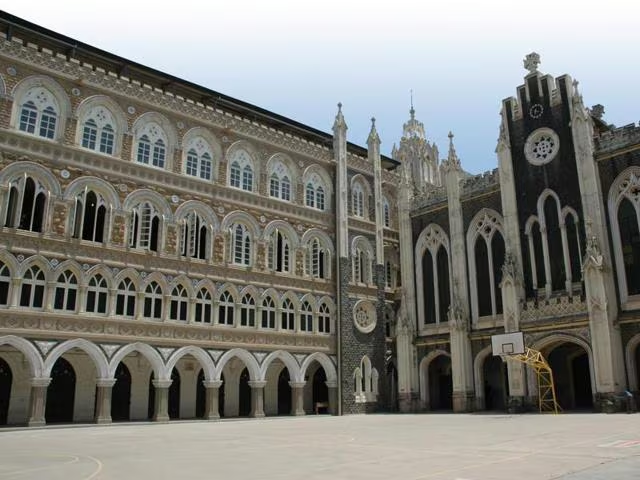
St. Xavier’s College, Mumbai
Autonomous college affiliated with Mumbai University offering elite B.Com programs.

Lady Shri Ram College, Delhi
Renowned women's college offering top-quality B.Com (Hons.) with finance focus.
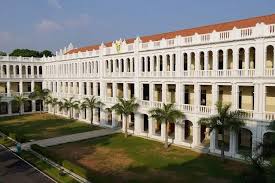
Loyola College, Chennai
Top-ranked autonomous institution with strong legacy in commerce and economics education.
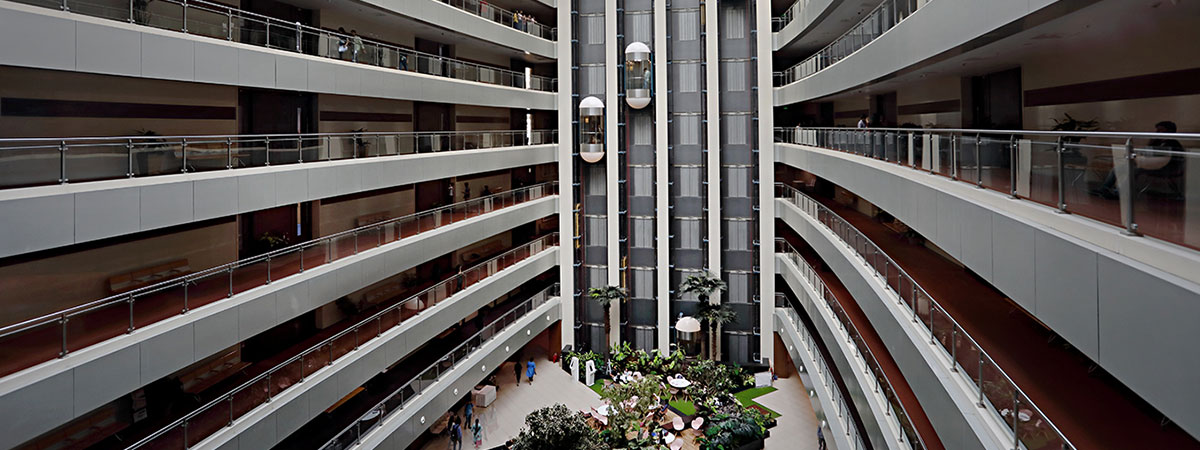
NM College, Mumbai (Narsee Monjee)
Highly reputed college for accounting and finance with exceptional industry links.
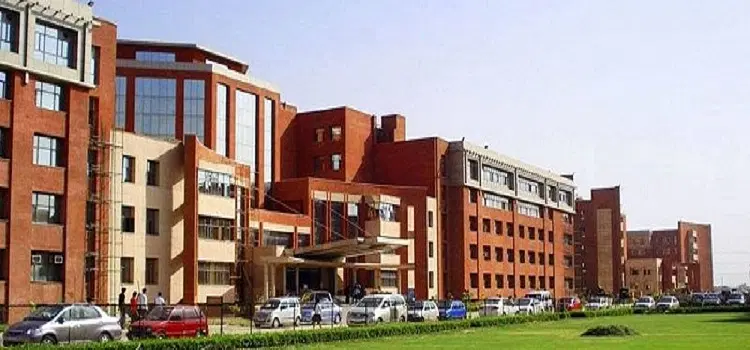
Amity University, Noida
Private university with modern commerce specializations and global industry exposure.
Selection Criteria for Featured Colleges
Academic Excellence
Faculty reputation, curriculum quality, university affiliation, and NAAC accreditation
Placement Record
Number of recruiters, average CTC, internship conversion ratio, and alumni feedback
Commerce Infrastructure
Finance labs, digital accounting tools, Bloomberg terminals, research journals
Industry Collaboration
CA firms, corporate guest lectures, case study projects, and field visits
Affordability & Value
Fee structure, ROI (Return on Investment), scholarships and ease of education loan access
Urban Exposure
Access to financial hubs, startup ecosystem, and commerce-focused career fairs
Frequently Asked Questions
Here are detailed answers to the most commonly asked questions about the B.Com program, including eligibility, specializations, career opportunities, higher studies, and scope in India and abroad.
Is B.Com better than BBA or BA in Economics?
B.Com focuses on core commerce subjects like accounting, taxation, and finance. BBA is more management-oriented, while BA Economics is analytical and theoretical.
Choose B.Com if: you are interested in careers like CA, finance, banking, or corporate accounting.
Choose BBA if: you're inclined towards marketing, HR, or management.
Choose BA Economics if: you're interested in data analytics, policy, or research.
Can I do B.Com without Maths in Class 12?
Yes, many universities offer B.Com (General) without the requirement of Mathematics. However, B.Com (Hons.) in reputed universities like DU may require Maths or a high percentage in Accounts/Business Studies.
Always check specific college eligibility before applying.
What are the job opportunities after B.Com?
B.Com graduates can work in finance, banking, taxation, auditing, and management fields.
Top Roles:
- Accountant / Auditor
- Financial Analyst / Tax Consultant
- Banking Executive / Investment Advisor
- Operations Executive / Business Analyst
Top Employers: Big 4 firms (Deloitte, KPMG, EY, PwC), HDFC, SBI, Infosys, ICICI, TCS
Average Salary: ₹3–7 LPA for freshers
Is B.Com a good choice for a finance career?
Yes, B.Com is the most preferred undergraduate path for a finance-focused career.
Ideal for: students aiming for careers in investment banking, equity research, financial consulting, or becoming CA, CFA, or FRM certified professionals.
With relevant certifications and internships, B.Com grads can land top roles in MNCs and financial institutions.
What higher studies can I pursue after B.Com?
B.Com offers a wide scope for higher education in both finance and management fields.
Popular Options:
- M.Com (for teaching/research/finance)
- MBA (Finance, Marketing, HR, Analytics)
- CA, CS, CMA (Professional accounting paths)
- PGDM, CFA, CFP, ACCA
You can also pursue law (LLB), data analytics, or public policy based on interest.
Is B.Com valid for studying abroad?
Yes, B.Com is widely accepted by international universities for master’s programs in commerce, accounting, or business.
Popular Abroad Options:
- MS in Accounting/Finance (USA, UK, Canada)
- MBA / MIM (Europe, Australia)
- PG Diploma in Business/Finance
Requirements: Good GPA, IELTS/TOEFL, GMAT (for MBA), LORs & SOPs
What is the average salary after B.Com?
Salary depends on your college, skills, and role. Here's an average breakdown:
Freshers (0–2 years):
- Accounts Executive / Analyst: ₹3–5 LPA
- Finance Associate / Audit Trainee: ₹4–6 LPA
- CA interns / Tax Assistants: ₹5–7 LPA
Mid-Level (5–10 years): ₹8–15 LPA
Top Roles (CFA, CA, MBA from top B-school): ₹20–35 LPA+